


Your shopping cart is empty!
Tomato "Marizol Purple"
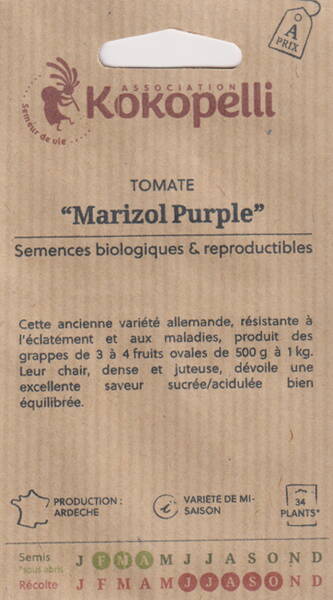
Eco seeds
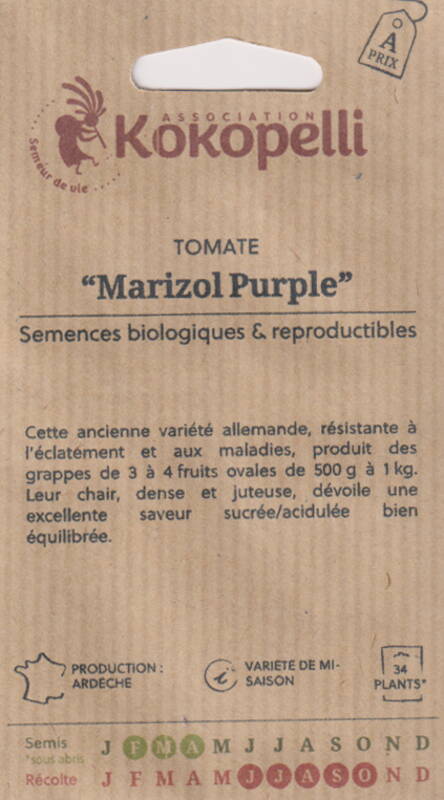
Tomato "Marizol Purple".
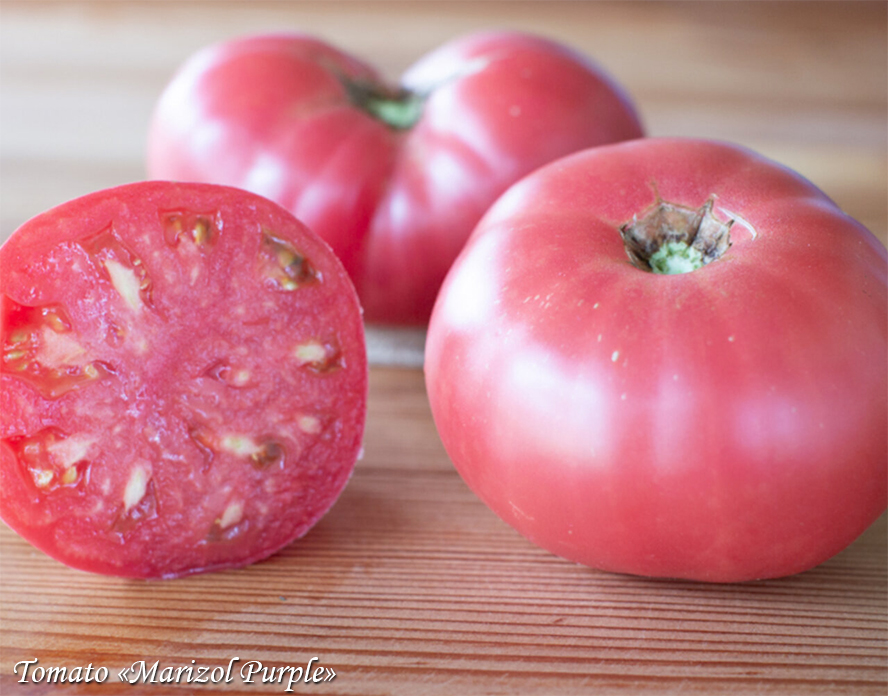
This wonderful old German variety, highly resistant to cracking and diseases, produces clusters of 3-4 large oblate (beefsteak) fruits weighing from 500 g to 1 kg. Their firm, juicy flesh boasts a superb, well-balanced sweet and tart flavor.
This wonderful old German variety, highly resistant to cracking and diseases, produces clusters of 3-4 large oblate (beefsteak) fruits weighing from 500 g to 1 kg. Their firm, juicy flesh boasts a superb, well-balanced sweet and tart flavor.
The plant is characterized by vigorous growth, and its dense foliage resembles that of a potato plant.
Maturity: mid-season.
Shape: oblate and ribbed.
Texture: juicy and meaty.
Growth type: indeterminate.
Color: deep pink (purple).
Fruit size: 10-20 cm in diameter.
Foliage: potato leaf.
Historical background: This beautiful heirloom variety originates from the Black Forest in Germany. It was brought to the United States late last century and was introduced to gardeners in the 1994 Seed Savers Exchange Yearbook by collector Joe Bratka and his family.
* Preparing tomato seeds for sowing.
First of all, the seeds should be calibrated, disinfected, and hardened off.
To reduce the susceptibility of future plants to diseases, place the sorted seeds for 10-20 minutes in a 1% solution of potassium permanganate (10 g of potassium permanganate per 1 liter of water). Then, rinse them thoroughly and dry them.
Warming up the seeds before disinfection also gives a great effect. To do this, place the seeds in a gauze bag and warm them for 2-3 hours near a stove or on a heating radiator, or simply dip them in hot water (+60°C) for 20 minutes.
For hardening off, place the disinfected seeds in a gauze bag inside a glass jar and leave them in the refrigerator at a temperature of +1...+3°C (or bury them in the snow) for 3 days.
Sow the tomato seeds in seedling boxes, filling them with a light soil mixture: 2 parts compost, 1 part sawdust or peat, and 1 part sand.
It is very beneficial to add the following to a bucket of this soil mixture: 15 g of ammonium nitrate, 20 g of double superphosphate, 10 g of potassium sulfate, or 2 cups of wood ash.
Fill the boxes with the mixture, level it out, compact it slightly, and water it. Make neat, shallow grooves 1 - 2 cm deep at a distance of 5 - 7 cm from each other. Sow the seeds in them with a spacing of 3 - 4 cm (about 3 - 5 g of seeds per box). Cover the seeds to a depth of 1 - 1.5 cm. Until the sprouts emerge, keep the boxes covered at a temperature of +20...+25°C, watering them morning and evening with slightly warmed water (+20...+25°C).
As soon as the first seedlings appear, remove the covers and place the boxes near a bright window during the day, moving them to a warmer spot at night.
Water the delicate sprouts once a day: initially with water warmed to +22°C, and later with room-temperature water.